
Northampton County Criminal Docket Searches
Every Northampton criminal case search should begin at the eCourts Portal Smart Search. The Portal is the public face of the statewide Enterprise Justice system. It is not a database Northampton County built itself. If you know the record number, type it in. If not, enter a name in Last, First order, and set the Location filter to Northampton County before trusting any name match as local. Advanced search types, including citation and attorney searches, work when the record information fits them.
Open the matching Case Summary. It is also called the Register of Actions, so work backward from the newest entry. A hearing search is a separate Portal path for current dates. When an expected public case fails to appear, keep the number's zeroes and punctuation intact. Then double-check the location you selected. After that, ask the Northampton County Clerk of Superior Court instead of guessing at a new format.
- Open Portal Smart Search and use a record number or a Northampton name search.
- Confirm the Northampton location, case type, status, and assignment before reading the result.
- Open the Case Summary/Register of Actions and check the newest case event and hearing details.
- Use Search Hearings or the Northampton criminal calendar to check the present setting.
- Ask the Clerk for an official copy, a missing file, or a date that remains unclear.
Note: Keep the Northampton record number exactly as supplied. Changed punctuation, missing zeroes, or the wrong county filter can block a valid search.
Northampton Criminal Portal Filters
Get the basic criterion right before touching anything fancy in a Northampton criminal search. Portal's advanced filters narrow a result set; they cannot produce one from nothing. Case Type and Case Status are both optional. The Portal guide warns that a status choice will not automatically shrink itself to match a selected case type. Pick an incompatible pair. You can then hide a Northampton result that a simpler search would have shown.
For current calendar details, Portal Search Hearings accepts a case number, party, attorney, bar number, judicial officer, or courtroom. It gives you the hearing location and time. It will not tell you whether an appearance is virtual or in person. It also says nothing about courtroom call order. The current case entry plus a Northampton court contact settles those questions.
The Criminal/Infraction Case Activity Report supplies the official categories behind the county-level reporting. Its Northampton section explains why the Portal's case type, assignment, and hearing fields matter. Those fields carry more detail than the broad word criminal.
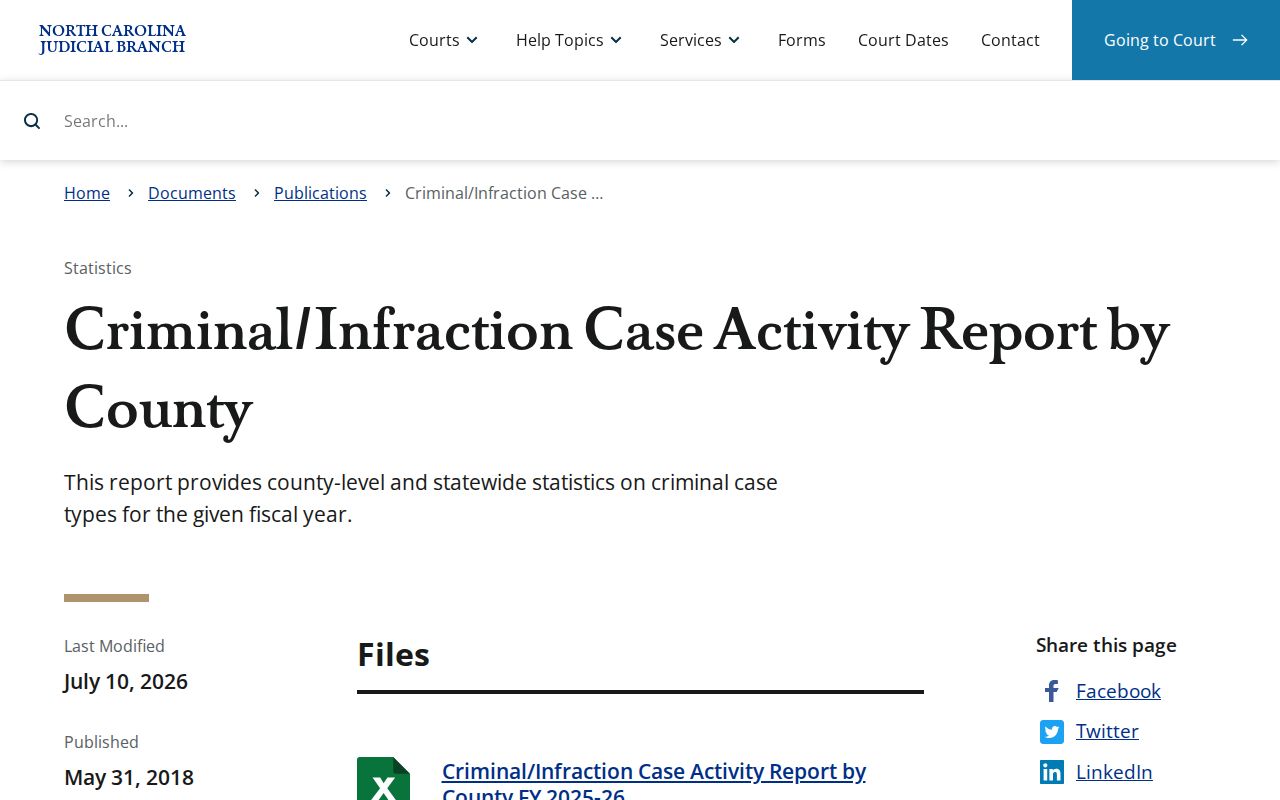
The report splits its counts into Superior Court criminal, District Court criminal, and infraction streams, mirroring the court-division split a Northampton searcher meets in practice.
Criminal Dockets: What They Show
A Northampton Case Summary is a detailed, near-real-time timeline, not a certified record. Depending on the case and public-access rules, a public result can include case information, assignment information, party roles, case events, dispositions, hearings, public documents where available, and financial information where applicable. Confirm identity and assignment first. Then read the Register of Actions in chronological order.
| Record number | The system identifier. A current Northampton format can follow YYXX000000-650; copy the live number exactly. |
|---|---|
| Assignment | Shows the court path and helps distinguish Superior Court, District Court, or magistrate activity. |
| Case events | Dated filings, settings, transfers, rulings, or other recorded actions in the timeline. |
| Hearings | Current setting information that should be checked again through Search Hearings or a calendar. |
| Disposition and financial fields | Appear when applicable; a displayed item does not replace the Clerk's official record. |
Portal usually posts Case Summaries and available document images within minutes of upload. Processing volume can slow availability, though. A document link is not a certified copy. When a large document fails to open, the Northampton Clerk can supply it. Ask for it in smaller segments.
Note: A Northampton event entry confirms a recorded action. Only a certified judgment or Clerk confirmation establishes the official record for that action.
Northampton Criminal CRS, CR, and IF Labels
Three statewide labels organize Northampton criminal reporting: CRS for criminal Superior Court, CR for criminal District Court, and IF for infractions. They describe activity-report streams. Do not expect every Northampton Portal entry to display the same shorthand.
- Pending
- A documented Portal status showing that the case has not reached a final disposition in that status view.
- Transferred to Superior Court
- A Portal status that can mark movement into the Northampton Superior Court track.
- Trial De Novo
- A new Superior Court trial after the type of District Court appeal that receives a new trial, not transcript review.
- Disposed
- A Portal status family for recorded outcomes. The actual event and order control the meaning in a Northampton case.
These labels help you follow the Northampton record without mistaking a brief status for a full account. A filing entry records an action. A hearing entry records a setting. Neither one alone proves the final legal effect of the matter.
Criminal Case Stages on the Docket
Read a Northampton criminal record as a sequence. The state-court record begins with a citation, charging event, or other criminal process. A felony moves through District Court first. That court handles preliminary or probable-cause activity, and then Superior Court hears it. A misdemeanor or infraction normally stays in District Court as the trial division. Match the Case Summary against its current assignment, hearing list, and later status entries.
Record flow: charging event → preliminary or District Court activity → hearing or setting → plea or trial → disposition → any post-disposition entry.
Northampton records can show Pending, Appealed, Transferred to Superior Court, Trial De Novo, or a range of Disposed statuses. Statewide reporting adds outcome categories. These include guilty plea, no contest, jury verdict, dismissal after deferred prosecution, and dismissal with leave. For the actual result, the Northampton case's own event text is the authority.
Note: The newest Northampton setting or disposition entry can change how an earlier charge, hearing, or procedural status should be read. Check it before relying on older entries.
Northampton Felony Docket Transfer
Court transfers matter for a Northampton docket search. A felony often starts in District Court with a preliminary hearing. It can then land on the Superior Court docket later. Misdemeanor and infraction appeals climb the same ladder for a brand-new trial. So the court named in an old entry may not be the court setting the next hearing date. Before assuming anything, pull the current Northampton Case Summary and check which division holds the case now.
For state-level background, the North Carolina Superior Court overview spells out the court's felony jurisdiction and its role in hearing District Court appeals, the framework behind Northampton Superior Court District 7B.
Old labels can mislead a Northampton felony search. The Superior Court assignment and the most recent hearing entry on the docket tell you far more than the District Court tag from an earlier stage of the case.
Northampton County Criminal Docket Courts
Northampton County criminal cases split across two trial divisions. Superior Court District 7B takes felonies plus misdemeanor and infraction appeals. District Court District 7 handles misdemeanors and infractions, including traffic tickets. Northampton magistrates handle preliminary criminal duties. They also set bail, and they accept certain plea or infraction dispositions. One office ties all of it together. The Northampton County Clerk of Superior Court keeps the trial-court records for every stream.
The North Carolina District Court page explains that misdemeanor, infraction, and magistrate structure. That structure is exactly what you see reflected in Northampton dockets.
The Northampton division map guards against one common mistake. A public Portal result is statewide, so the assigned court, not the Portal listing, shows the local procedural path a case actually follows.
Northampton Criminal Bail and Continuance Rules
Continuances are court-controlled events in Northampton. The county's Local Rules and Forms page publishes an Administrative Order In Re: Continuance Policy covering both Superior Court and District Court. The same page carries a Motion to Continue Infractions or Criminal form. A reset or new setting comes from the judge, not from a website edit. Portal offers no way to change a date or request a move.
Bail material sits on the same page. The local rules index covers pretrial-release information for Bertie, Hertford, and Northampton. Bond amounts, conditions, and eligibility vary case by case. So rely on the live Northampton record and a call to the right court or the Clerk for current details. The Northampton local rules and forms index is where those materials are published.
A date change is official only in the current record. Confirm any Northampton continuance through the live Case Summary, hearing search, calendar, or Clerk rather than trusting an old notice.
Access Rules for Criminal Dockets
North Carolina law puts the Clerk in charge of records, files, dockets, and indexes. The public may generally inspect them during regular office hours unless another law closes access. In Northampton, that means two main channels. Portal provides public online entries for case lookup. The Clerk handles paper-file inspection and certified copies. The same office covers records left off Portal, and helps when a search comes up empty. Public self-service terminals at clerk offices add one more way in.
Some limits still apply. Portal never shows sealed or confidential records. Documents holding sensitive information stay off the screen. Juvenile dependency matters carry statutory confidentiality. An eligible dismissal or not-guilty outcome may later qualify for expunction. So a missing Northampton Portal result could mean several things. It might be a wrong county or case-number format, a restriction, an expunction, or a conversion quirk. It is never a reason to hunt for a workaround.
Northampton access rules.
G.S. 7A-109 requires Clerk record keeping and generally permits inspection unless law provides otherwise.
G.S. 15A-146 provides an expunction route for eligible dismissed or not-guilty charges.
G.S. 7B-2901 restricts public inspection of juvenile abuse, neglect, and dependency records.
Northampton Criminal Docket Clerk Path
When the online docket is not enough, go to the source. The Northampton County Clerk of Superior Court sits at 128 E. Jefferson Street in Jackson. The main number is (252) 574-3100. The official courthouse page lists public hours on weekdays from 8:30 a.m. to 5:00 p.m. Mailed requests go to P.O. Box 217, Jackson, NC 27845. A Superior Court, District Court, or magistrate action may appear in the record. Either way, this office keeps the underlying Northampton criminal file.
A public terminal can speed up a Northampton case lookup. Even so, the county where the case sits is the right place to inspect its paper file. Calling ahead is wise for a missed court date. It also helps for a recent change, a copy request, or a record Portal will not display.
Want the legal footing behind division assignments? The District Court criminal-jurisdiction statute explains why misdemeanor and infraction records run through the District Court division.
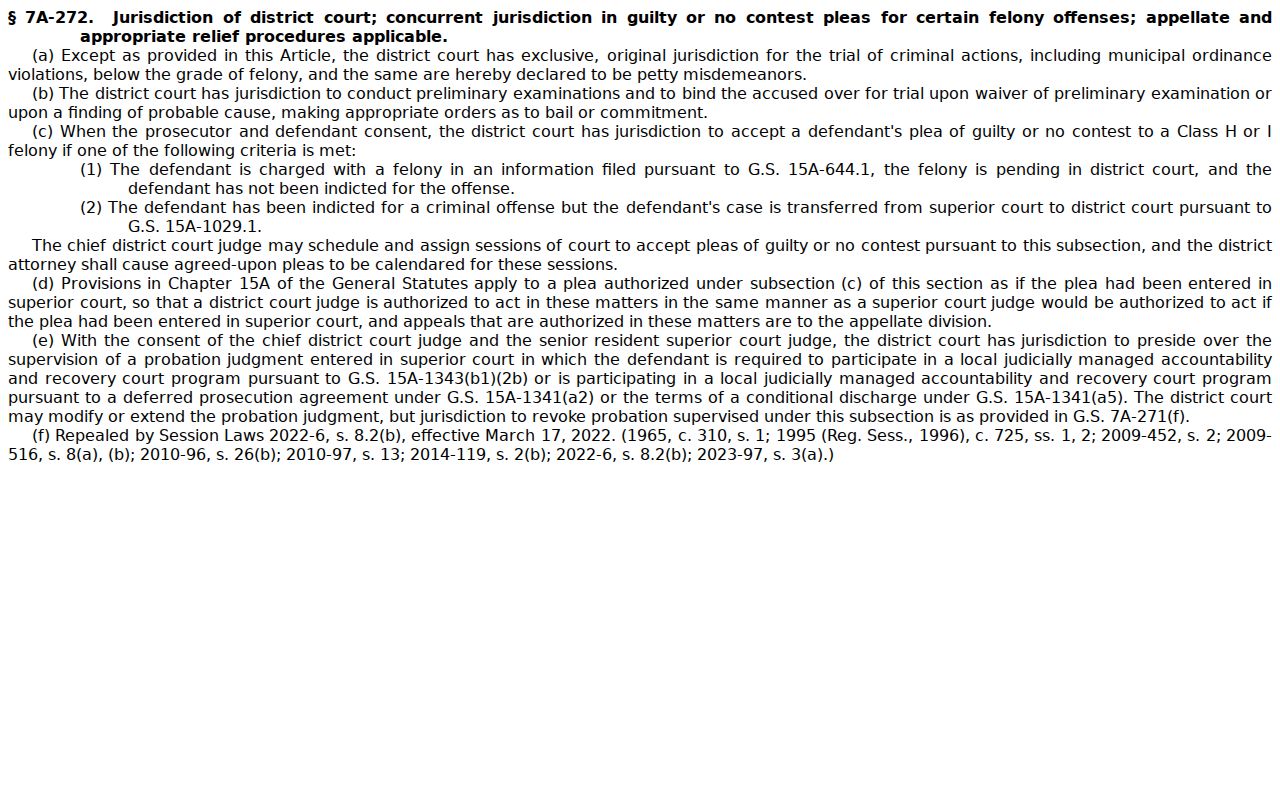
The Northampton Clerk path is the handoff from an online Case Summary to an official criminal court record.
Note: Portal offers convenience, but the Northampton Clerk holds the official file and provides certified records when available.
Northampton Criminal Docket Expunction
Expunction rewrites the access rules for a Northampton criminal record. A dismissal or not-guilty outcome is not automatically an expunction. Eligibility turns on the governing statute and the charge. The person's history matters too, along with how the court process unfolded. The public Portal view cannot answer that question for an individual case.
For the controlling law, the official G.S. 15A-146 text sets out the eligible dismissal and not-guilty provision.
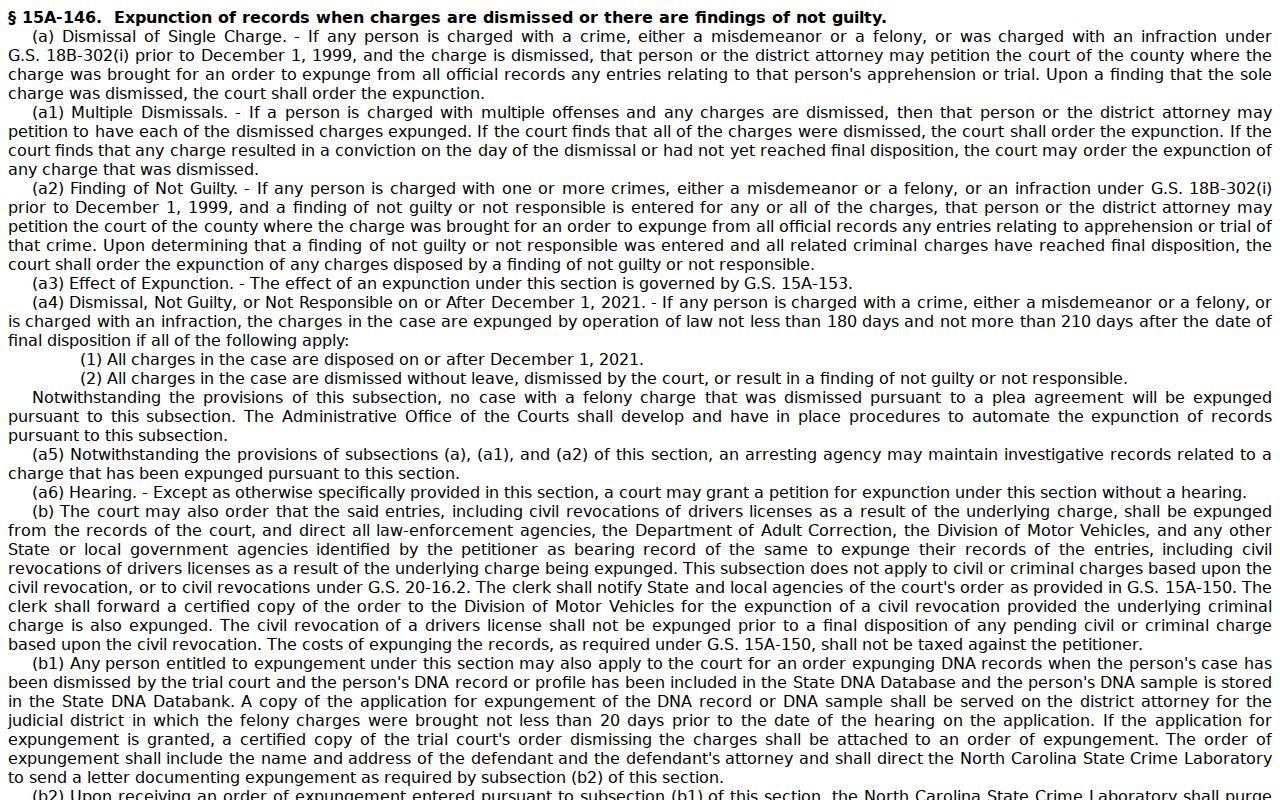
A Northampton record that is absent or restricted has a reason behind it. Verify the case information with the Clerk, and respect whatever access rule applies.